
How to Search Criminal Dockets
Begin online with the official Search ARCourts public case search. It covers public case data from Arkansas courts on the Contexte system. Got the case number? Type it in exactly. A participant search works too, using first, middle, and last names, and you can narrow results by Lee County, court location, date, or case type.
Know which court you are searching first. Lee County Circuit Court holds the felony cases. The 22nd State District Court, Marianna Department, keeps county and city misdemeanors and handles some first appearances, warrant work, and release inquiries tied to circuit prosecutions. When a broad name search returns many hits, check each one against both the county line and the court line.
- Open Search ARCourts and choose a case or participant search.
- Enter the exact case number, or use enough name detail to narrow the list.
- Apply Lee County and court filters when unrelated results appear.
- Open the matching case and read charges, filings, dispositions, and future events separately.
- Call the filing clerk when an entry lacks a linked document or certification is needed.
Lee County Criminal Docket Split
Two trial levels can hold a Lee County criminal docket. Felony prosecutions stay with Circuit Court. District Court keeps the local misdemeanor and traffic cases. It may also handle certain early steps in a circuit prosecution. That overlap never moves custody of the full felony file to the District Clerk.
| Court | Criminal work | Record contact |
|---|---|---|
| Lee County Circuit Court | Felonies, later circuit proceedings, judgments, and appeals from district court | Circuit Clerk, 870-295-7710 |
| 22nd State District Court | Misdemeanors, warrants, first appearances, and approved preliminary referrals | District Clerk, 870-295-7730 |
The Arkansas Judiciary description of Circuit Court jurisdiction sets out what that court handles, and it is the source for the Lee County criminal docket image that follows. Match the docket to its local clerk before mailing any copy request.
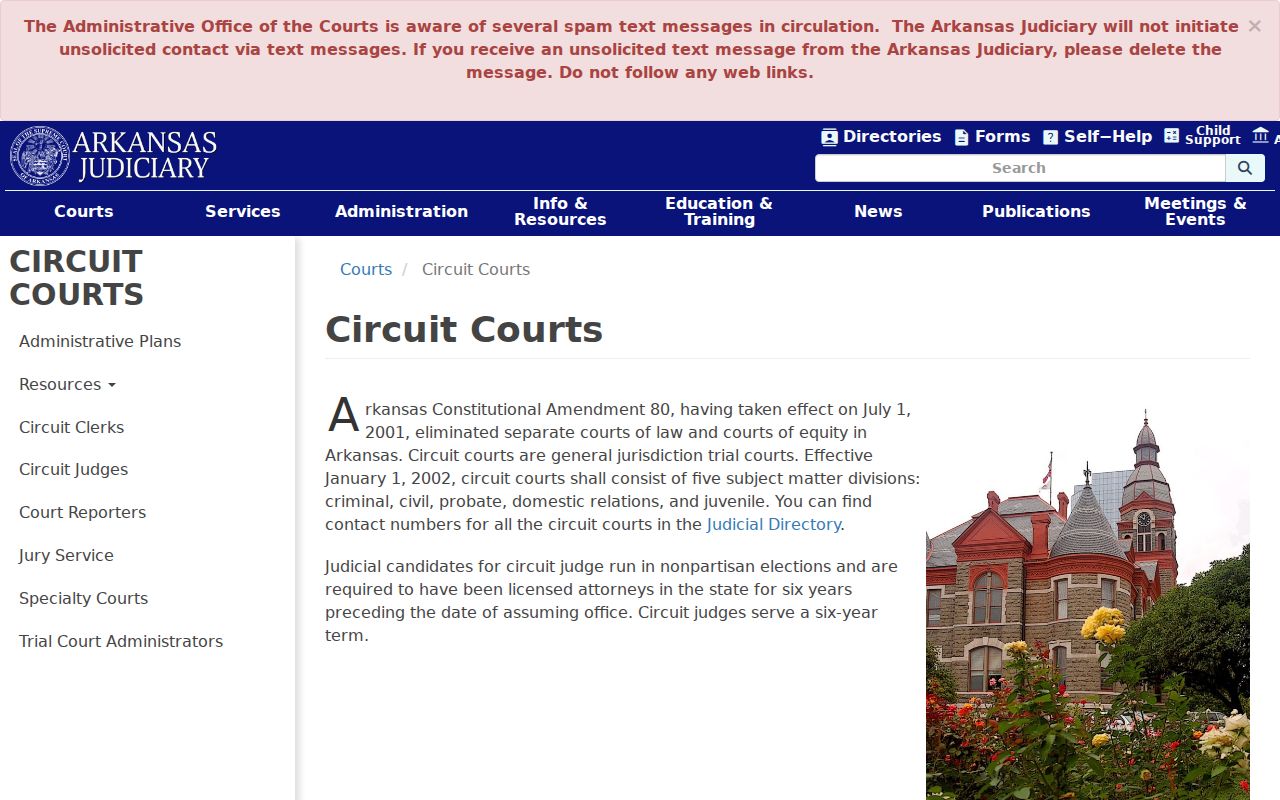
That official court page explains the split. It is why a Lee County felony search starts with Circuit Court rather than the district misdemeanor docket.
What a Criminal Docket Shows
Search ARCourts calls its chronological case-information display the public docket view. Start with the header. From there, work down through participants, charges, events, future settings, and judgments. One prosecution can carry several charges with different results. So the overall case status never replaces the disposition on each individual charge.
| Case number | The court-issued identifier. Lee County has no published official format guide, so copy it exactly and do not infer a mask. |
|---|---|
| Court and judge | The filing court and assigned judicial officer, which route questions to the correct office. |
| Charge | The alleged offense and any code, class, or description entered by the court. |
| Filings and events | Dated motions, notices, orders, appearances, and other steps in the case history. |
| Future events | Scheduled activity that should be checked against later resets or orders. |
| Disposition | The recorded result for a charge or case, such as dismissal, conviction, or acquittal. |
A docket line is only an index entry. If no image opens behind it, the filed paper may still sit with the Lee County clerk.
Lee County Criminal Docket Codes
Under the 22nd District administrative plan, Lee County uses two local warrant-register codes. SW marks a search-warrant docket, and AW marks an arrest-warrant docket. Both are preliminary registers, not guilt findings and not a published Lee County criminal case-number format.
- SW
- A district register for a returned search warrant before a later criminal file may open.
- AW
- A district register for a returned arrest warrant before a later criminal file may open.
- Disposition
- The court-recorded result of a charge or case.
- Nolle prosequi
- A prosecution decision ending the listed charge without a conviction, subject to the actual order.
Once a full case opens, any related warrant information moves into it. So an AW entry does not mean Lee County entered a conviction, and an SW entry alone does not identify a public prosecution.
Stages on a Criminal Docket
A Lee County criminal docket may open with a complaint, citation, information, or indictment, depending on the charge and the court. Even when a felony will proceed in Circuit Court, District Court may still record a warrant return, a reasonable-cause finding, a first appearance, a counsel appointment, or a release inquiry. Motions, notices, and orders then build out the filing history.
Docket flow: Filing › Arraignment › Pretrial › Plea or Trial › Disposition › Sentencing
Treat the sequence as a reading aid. No case is promised every step. A dismissal can end one charge early, and several counts can resolve on different dates. An appeal may even create its own appellate docket while the Lee County trial docket stays on file as history.
Lee County Criminal First Appearances
For a person whose felony will remain in Lee County Circuit Court, the district judge may still conduct the first appearance. The 22nd District plan also allows reasonable-cause work, advice or appointment of counsel, and a pretrial-release inquiry. Those early events are why a district entry can belong to a circuit prosecution's path.
Remember that a first appearance is not a trial. It decides nothing about guilt. After it, read the docket header and the future events to learn which court now holds the next setting, and which Lee County clerk keeps the paper you want.
Lee County Criminal Docket Clues
Three words on a Lee County criminal record mean different things. The plea is one. It is the defendant's formal response to the charge. A disposition is the result of the case or of one charge. A judgment records a court determination. It may include the sentence. Read one field alone and you may miss the rest of the story.
- Pending or open means a charge has not reached a final recorded result.
- Dismissed means the listed charge ended without conviction, as the order states.
- Guilty or convicted records an adverse adjudication or accepted guilty plea.
- Not guilty or acquitted records no conviction after adjudication.
- Appealed means higher-court review began; it does not erase the trial history.
For an official outcome, list every charge and request the actual disposition or judgment from the proper Lee County clerk. A portal summary is not a certified copy.
Which Court Holds Criminal Dockets
Lee County sits inside Arkansas's First Judicial Circuit. Five circuit divisions can serve the county. A division's judge may keep chambers in another county within the circuit, but every Lee filing still lives with the Lee County Circuit Clerk. The 22nd State District Court serves Lee and Phillips Counties, and Marianna hosts Lee County's designated department.
Under the current local plan, that District Court handles criminal and traffic divisions plus certain defined preliminary circuit referrals. It cannot take a not-guilty plea under the listed referral authority, and it declines a referred matter needing live testimony where compliant digital recording is unavailable. Those limits explain why an early district event can show up while the felony itself keeps moving in Circuit Court.
The U.S. Attorney for the Eastern District of Arkansas prosecutes federal cases on a separate track that Search ARCourts does not cover at all.
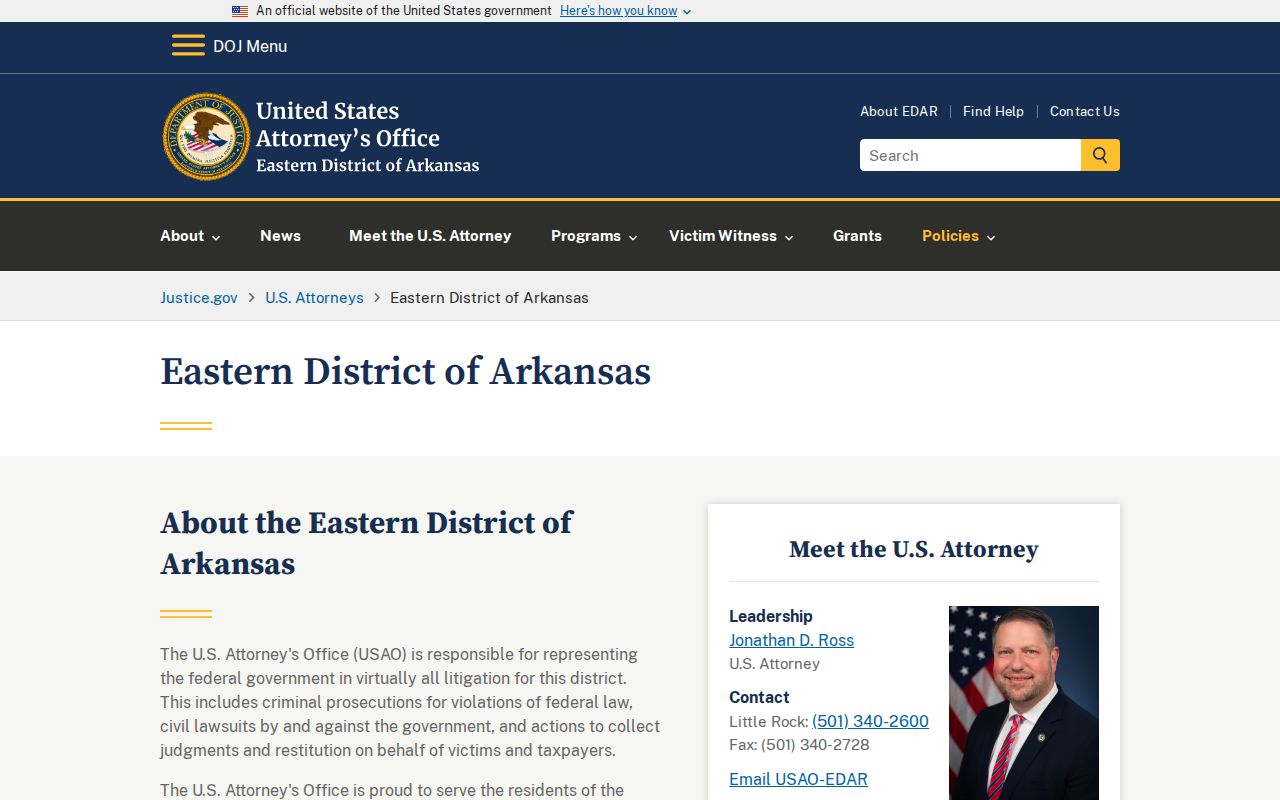
A federal filing can look a lot like a local one at first glance. Use the court calendar distinctions to keep an Eastern District prosecution separate from a Lee County Circuit or District Court docket.
Lee County Criminal Docket Times
Lee County criminal and traffic cases that start in the county land on the Monday docket. That block starts at 9:00 a.m. Cases that start in Marianna come after, at 10:00 a.m. That Monday rhythm shapes the local criminal docket, but treat it as a pattern only. A block time alone never proves your case sits on a given Monday. So check the docket or the clerk before you count on a date.
Confirm the case: Read the newest future event and any later continuance, then call the District Clerk at 870-295-7730 when the active date is unclear.
The clerk's word beats any printed schedule. A notice from the assigned court, or a call to the clerk to confirm, controls over the general times listed here. The Lee County court calendar process page also covers posted courthouse dockets and the First Circuit calendar boundary.
Lee County Criminal Docket PDFs
A Lee County filing can show up in Search ARCourts with no public document attached. That gap does not mean the paper is gone. Only some cases carry public document links. Safari may block the document window unless pop-ups are allowed. Papers filed through Arkansas eFlex stay closed to many public users too. That holds even after remote filing.
The fastest route is a call. For a circuit felony filing, phone the Lee County Circuit Clerk at 870-295-7710. For a district misdemeanor case, phone the District Clerk at 870-295-7730. Have the case number, entry date, and document title ready. Ask about counter viewing, mail or email delivery, the current fee, and certification. Lee County posts no copy fee schedule and no local request form online.
Lee County Criminal Docket Access
The web is not the only way in. Both criminal clerk counters sit at 15 East Chestnut Street, Marianna, AR 72360. A requester can call the right clerk. A visit or a mailed request works too. The county publishes nothing about public terminals, counter hours, payment types, or how long older records take to pull. Confirm those details before you travel or send money.
Keep a mailed request tight. List the court and the exact case number. Add the caption if you have it, plus the filing title and date. Say whether you want a plain or certified copy, your delivery address, and the most you will pay. Call first if you plan to fax the Circuit Clerk at 870-295-7712. For ARCourts portal trouble, support sits at 501-410-1900 option 1 or 866-823-5778. It cannot answer a question about a Lee County case that belongs to the filing clerk.
Administrative Order 19 sets out the AOC's formal route for compiled court data. One Lee County criminal disposition does not belong there. Older records should go to the local office that holds them. No official online year cutoff or storage policy has been published.
Public Access and Sealed Criminal Dockets
Arkansas Supreme Court Administrative Order 19 governs who may see court records and strips confidential information from Internet access, with Administrative Order 19.1 covering redaction. Juvenile material, protected identifiers, data made confidential by law, and records a judge has restricted may be missing or limited in what you can view. State law also gives courts a process for sealing eligible criminal records.
Key rules:
Administrative Orders 19 and 19.1 govern public court-record access and redaction.
Ark. Code Ann. § 16-90-1401 et seq. supplies the Comprehensive Criminal Record Sealing Act.
An empty result does not prove that no Lee County criminal matter exists. Check the spelling, the court level, and the case number first. Then ask the clerk's office whether that category of record is simply not online, too old, sealed, juvenile, or otherwise restricted. Authorized access may require proof of role or a court order.
Lee County Specialty Criminal Dockets
The current 22nd District plan states plainly that its judge runs no specialty-court program. That matters. It stops a wasted hunt for a separate Lee County district drug or DWI docket. The First Judicial Circuit plan, though, describes circuit-wide Adult Drug Court, Juvenile Drug Court, and Veterans Court programs. Those may take qualifying Lee County residents.
Treatment details do not become public by default. Juvenile information is confidential. Program performance entered in Contexte is no promise of open treatment records. When a public Lee County criminal docket exists for the person, search that first. Then ask the program or the clerk about limits. The circuit plan calls Adult Drug Court a four-phase, post-adjudication program. Veterans Court is described as a monthly program held in Phillips County.